
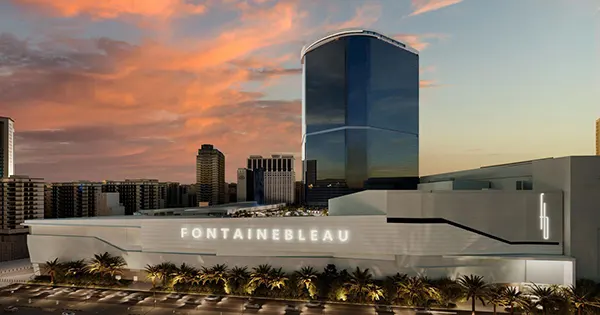
Fontainebleau Las Vegas Casino: A New Major Player on the Strip
The opening of Fontainebleau Las Vegas has reshaped the competitive landscape of the Strip, introducing a large-scale resort that combines long-delayed ambition with modern expectations. After years of halted construction and ownership changes, the property finally launched in December 2023, quickly establishing itself as one of the most talked-about offline casinos in Las Vegas. By 2026, it has already secured a firm position among the city’s premium destinations, attracting both seasoned players and new visitors interested in updated gaming environments.
Scale, Design and Positioning on the Las Vegas Strip
Fontainebleau Las Vegas stands out primarily because of its scale. The resort features more than 3,600 hotel rooms, a vast casino floor exceeding 150,000 square feet, and a location at the northern end of the Strip. This positioning matters: historically, the northern section struggled to match the foot traffic of central resorts, but Fontainebleau contributes to a gradual shift, encouraging new development in the area.
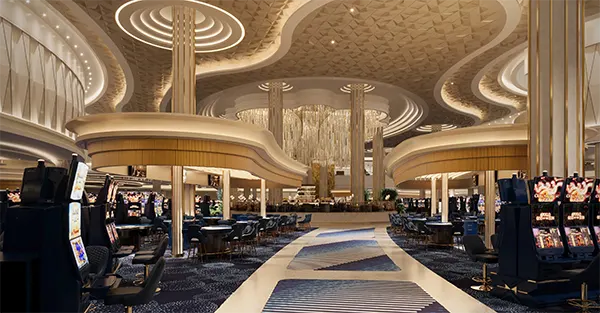
Architecturally, the property reflects a contemporary interpretation of luxury rather than classic Las Vegas themes. Instead of heavy ornamentation or themed environments, the design focuses on open spaces, natural light, and modern materials. This approach aligns with current trends in hospitality, where understated design is often preferred by high-value guests.
From a strategic perspective, Fontainebleau targets both high-end and mid-tier visitors. While it includes premium suites and exclusive areas, it also maintains accessible gaming options and standard hotel categories. This dual positioning allows it to compete with established names such as Wynn, Venetian, and Resorts World without limiting its audience.
Development History and Financial Context
The project’s history is unusually complex. Originally announced in the mid-2000s, construction was halted during the 2008 financial crisis, leaving the structure unfinished for over a decade. During that time, ownership changed multiple times, reflecting the challenges of financing large-scale casino developments.
Revival of the project in the early 2020s coincided with renewed investor confidence in Las Vegas. The final cost reportedly exceeded $3.7 billion, making Fontainebleau one of the most expensive resorts ever completed on the Strip. This level of investment signals long-term confidence in Las Vegas tourism and gaming demand.
By 2026, the casino operates under a stable financial structure, supported by diversified revenue streams including gaming, hospitality, retail, and entertainment. This diversification reduces reliance on traditional casino income, which has become an industry standard for modern resorts.
Casino Floor, Gaming Options and Player Experience
The casino floor at Fontainebleau offers a broad mix of gaming formats, including over 1,300 slot machines and approximately 130 table games. The selection reflects a balance between classic offerings such as blackjack, roulette, and baccarat, and newer formats designed for faster gameplay and digital integration.
One notable feature is the emphasis on technology. The casino integrates cashless payment systems, digital loyalty tracking, and mobile interaction tools. These systems are increasingly common in Las Vegas, but Fontainebleau was designed with them from the outset, resulting in a more seamless experience compared to older properties.
Player segmentation is also clearly defined. High-limit rooms provide private gaming environments with personalised service, while the main floor caters to a wider audience. This separation helps maintain comfort for different player profiles without creating excessive barriers between them.
Rewards, Services and Operational Approach
The Fontainebleau Rewards programme is structured to compete with established loyalty systems such as MGM Rewards and Caesars Rewards. It offers tier-based benefits, including room upgrades, dining credits, and priority access to events. Importantly, the programme is integrated across all resort services, not limited to gaming activity.
Customer service is another area where the casino aims to differentiate itself. Staff training focuses on consistency and responsiveness rather than overt formality. This reflects broader industry trends where guests value efficiency and clarity over traditional luxury rituals.
Operationally, the casino emphasises flexibility. Table limits vary throughout the day to match demand, and the mix of games is regularly adjusted based on player behaviour data. This adaptive approach allows the property to respond quickly to changing preferences, which is essential in a highly competitive market.
Entertainment, Dining and Non-Gaming Revenue
Modern Las Vegas resorts rely heavily on non-gaming revenue, and Fontainebleau is no exception. The property includes a wide range of restaurants developed in collaboration with well-known chefs, as well as casual dining options aimed at broader audiences. This mix supports both high-end experiences and everyday convenience.
Entertainment plays a central role in attracting visitors beyond the casino floor. The resort hosts concerts, nightlife events, and seasonal performances, positioning itself as a destination for both tourists and locals. This approach reflects the ongoing shift in Las Vegas towards entertainment-driven revenue.
Retail and wellness facilities further expand the offering. High-end boutiques, spa services, and fitness areas contribute to longer guest stays and higher overall spending. These elements are essential for maintaining competitiveness with other integrated resorts on the Strip.
Market Impact and Future Outlook
Since its opening, Fontainebleau has influenced development patterns on the northern Strip. Increased foot traffic and renewed investor interest suggest that the area may continue to grow, potentially reducing the dominance of central locations.
Competition remains intense, particularly from newer resorts such as Resorts World and established leaders like Wynn and Bellagio. However, Fontainebleau’s modern infrastructure and diversified revenue model provide a solid foundation for long-term performance.
Looking ahead to the late 2020s, the casino’s success will depend on its ability to adapt to evolving player expectations. This includes further integration of digital tools, personalised services, and continued investment in entertainment. If these elements are maintained, Fontainebleau is likely to remain a significant presence on the Las Vegas Strip.