
Why a Foreign Casino Licence Does Not Mean a Casino Is Legal in Your Country
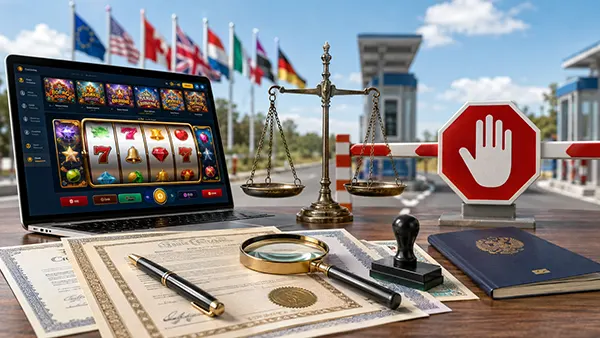
A casino may display a genuine licence issued in Malta, Curaçao or another jurisdiction and still have no legal right to accept players from the country where you live. Gambling licences are normally territorial: they authorise specific activities under a particular legal system and do not create universal permission to operate worldwide. For players, the important question is therefore not simply whether an online casino has a licence, but whether that operator is legally authorised to provide its services to people in their own country. This distinction has become increasingly important as national gambling regulators tighten licensing, advertising, payment and player-protection rules.
A Gambling Licence Has a Defined Territorial Scope
A gambling licence is an authorisation issued under the laws of a particular jurisdiction. It can establish that an operator has passed suitability checks, submitted information about its ownership and technical systems, and agreed to comply with the rules imposed by the licensing authority. What it does not normally do is override the gambling laws of another country. If an operator holds a licence in one jurisdiction but actively serves customers in a country that requires its own domestic authorisation, the foreign licence alone may be insufficient.
This is why statements such as “internationally licensed” should be treated carefully. There is no single worldwide casino licence recognised automatically by every national regulator. Gambling legislation remains largely country-specific, and governments decide which operators may legally target residents, which products may be offered, how advertising is controlled and what consumer safeguards must be provided. Two countries can therefore reach completely different legal conclusions about the same casino even when the operator holds a valid licence elsewhere.
The territorial issue also applies within Europe. European operators can conduct business across borders in many industries, but gambling has remained an area where individual states retain extensive regulatory control. A licence issued in one European jurisdiction does not automatically replace licences required elsewhere. Operators often maintain several separate licences because each authorisation applies to the market and activities covered by the relevant national rules.
Why an MGA Licence Is Not Universal Permission to Accept Players
The Malta Gaming Authority is one of the best-known gambling regulators in Europe, and an MGA licence can be a meaningful sign that an operator is subject to Maltese regulatory requirements. However, it should not be interpreted as permission to provide casino games in every European country. Even Malta’s own regulatory framework recognises that gambling authorisations have territorial scope. When the MGA assesses certain foreign authorisations for recognition in Malta, it specifically considers the geographical scope of the original licence and whether the licensed services may be offered outside the jurisdiction that issued it.
This distinction is visible in the way large gambling companies organise their operations. A company may hold an MGA authorisation for certain activities while relying on a separate British, Swedish or other national licence for customers in another regulated market. The fact that the same company is licensed by several authorities is not unnecessary duplication. It reflects the legal reality that permission granted by one regulator does not automatically satisfy the requirements imposed by another.
Players should therefore separate two questions. The first is whether the licence displayed by the casino is genuine. The second is whether that licence is relevant to the player’s country. A genuine foreign licence may provide more information about the operator than having no licence at all, but it cannot by itself prove that the casino is locally authorised. The regulator responsible for gambling in the player’s country is usually the more useful source for checking legal status.
National Rules Can Make the Same Casino Legal in One Country and Illegal in Another
Great Britain provides a clear example of market-specific licensing. The Gambling Commission states that an operator providing remote gambling to consumers in Great Britain requires the appropriate British operating licence regardless of where the business itself is based. An offshore company cannot rely only on a foreign casino licence when it is providing gambling facilities to consumers in England, Scotland or Wales. A remote casino operator serving those customers normally needs authorisation from the Gambling Commission for the relevant activity.
Sweden follows a similar national licensing model. Gambling for money that falls within the Swedish licensing system requires authorisation under Swedish gambling law. Commercial online gambling and betting operators can apply to the Swedish Gambling Authority, Spelinspektionen. Licensed businesses are then subject to Swedish requirements concerning matters such as player protection, self-exclusion, marketing and regulatory supervision. A casino licensed abroad does not acquire Swedish licensed status merely because its overseas authorisation is valid.
France demonstrates an even stronger difference between a foreign licence and local legality. The French gambling regulator, Autorité Nationale des Jeux, states that online casino sites are illegal in France and that an international online casino licence has no recognised legal value for making such casino activity lawful there. France permits specific categories of online gambling, including authorised sports betting, horse-race betting and poker, but ordinary online casino games are not part of the authorised private online gambling offer. A foreign licence therefore cannot turn an otherwise prohibited online casino service into a legal French casino.
Local Licensing Rules Also Determine Which Games May Be Offered
Legal status is not determined only by the name of the regulator on a licence certificate. The authorised gambling products matter as well. Some countries license online casino games, sports betting and poker under separate categories. Others permit betting and poker while restricting online roulette, blackjack or slot games. An operator may therefore be properly authorised for one form of gambling but not for another, even within the same country.
This is one reason players should avoid judging legality from the casino’s homepage alone. A licence number may be displayed correctly while the actual authorisation covers a different company, domain, gambling product or territory. Regulators commonly maintain registers that identify the legal entity holding the licence and, in many cases, the authorised websites or activities. Checking those details provides much stronger evidence than relying on a licence logo placed in the footer of a casino website.
Latvia illustrates how detailed local authorisation can be. Latvian gambling law requires a licence for operating interactive gambling, and the licensing process covers matters including the games to be offered, the systems used to operate them and the internet address through which gambling is provided. Amendments taking effect in 2026 also changed parts of the administrative framework. The important point for players remains straightforward: permission from a foreign gambling authority is not a substitute for the authorisation required under Latvian law.
How Players Can Check Whether a Foreign-Licensed Casino Is Legal Locally
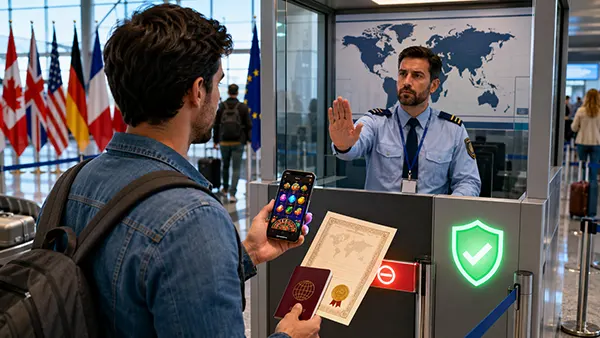
The most reliable first step is to identify the gambling regulator responsible for your country and check its official register of licensed operators. Do not begin with the casino’s own claims. Search for the exact company name and, where the regulator provides this information, the exact website domain. A matching operator name is useful, but it is better to confirm that the domain you intend to use is connected to the licence. Casino groups frequently operate several brands, and not every website owned by the same corporate group is necessarily covered by the same authorisation.
Next, look at what the licence actually permits. A regulator may distinguish between casino gaming, betting, poker, bingo, lotteries and software supply. A business can legitimately hold a gambling-related licence without that licence giving it permission to operate an online casino for consumers. Software suppliers are a good example: they may be regulated because they manufacture or provide gambling software, but that does not necessarily mean they are authorised to contract directly with players as a casino operator.
Finally, consider how the casino is targeting your country. Local-language pages, advertising directed specifically at residents, local payment methods, country-specific promotions or active acceptance of local customers can all be relevant to regulatory questions, although the precise legal test varies between jurisdictions. A casino should not be assumed legal simply because registration is technically possible. Websites can accept visitors from countries in which their services are not authorised, and technical accessibility is not the same thing as legal permission.
Licence Logos, Company Details and Regulator Registers Should Match
A legitimate licence claim should be verifiable independently. Check the regulator’s own website rather than relying exclusively on a badge or licence number shown by the casino. Confirm the name of the licensed company, the current status of the authorisation and the activities covered. Where domains are listed, make sure the casino address matches. If the regulator provides a verification link or dynamic licence seal, use it to reach the regulator’s record directly rather than assuming that an image of a regulatory logo is authentic.
Company information should also be consistent across the casino’s terms, privacy information, payments section and licence record. Different trading names are not automatically suspicious because one licensed company can operate several brands, but unexplained differences deserve attention. If the website names one operator while the regulator’s record belongs to an unrelated business, or if the displayed licence cannot be found in the official register, the licensing claim should not be treated as established.
The safest rule is simple: verify legality according to the country in which you are located, not according to the most impressive foreign licence mentioned by the casino. A respected overseas authorisation can show that an operator is regulated somewhere, but local law determines whether it may legally offer gambling to you. In regulated markets such as Great Britain and Sweden, this normally means checking the national regulator’s licence register. In countries such as France, it also means understanding whether the type of online gambling being offered is permitted at all. That approach gives a far more accurate picture than treating any foreign gambling licence as worldwide approval.